Northstar’s Jack Ream and Dunaway’s Jennifer Douglas Discuss Collaborative K-12 Project Delivery
When market conditions change, the strength of a project team is often measured by how well its members work together. From fluctuating material costs and long lead times to supply chain challenges, delivering projects on schedule for K-12 clients requires more than technical expertise. It requires collaboration, flexibility, and a shared commitment to finding solutions.
To explore how partnerships drive successful project delivery, we sat down with Jennifer Douglas, PE, Associate Principal and Director of North Texas Structural at Dunaway, and Jack Ream, Vice President of Operations at Northstar Builders, to discuss navigating uncertainty, maintaining critical school schedules, and the role collaboration between owners, designers, and contractors plays in keeping projects moving.
How have evolving market conditions influenced the way K-12 projects are planned and delivered in recent years?
Jack Ream: There’s a lot to unpack in that question. It often depends on the size of the project. For an elementary school, for example, construction may take about 14 months, but when you account for design, permitting, and coordination, it’s often closer to a two-year process from start to finish. As schedules have become more complex, teams have had to plan further ahead and make key decisions earlier to keep projects moving. We perform most of our work as construction manager at risk (CMAR) because it exposes us to the project early in the design. It allows for earlier communication with the entire design team to discuss market trends and hopefully alleviate certain market issues.
What does effective collaboration between the contractor and design team look like when navigating today’s market challenges?
Jennifer Douglas: For me, it’s asking as many questions as possible up front before we get too far into design. We want to understand how the project will be sequenced, what structural systems make the most sense, and what challenges we may need to anticipate. The benefit of the CMAR process is that the contractor is involved from the very beginning, which allows us to ask those questions early and keep the collaboration going throughout design.
Jack Ream: Communication and collaboration are the biggest things. We talk through options and share what we’re seeing in the market, whether that’s material availability, lead times, or constructibility concerns. We’ve worked with Dunaway for years, and everyone knows they can pick up the phone and work through an issue together. That level of communication helps us make decisions early instead of reacting later.
We’ve worked with Dunaway for years, and everyone knows they can pick up the phone and work through any issue together. That level of communication helps us make decisions early instead of reacting later.
”What decisions or conversations need to happen earlier in today’s project environment?
Jack Ream: Right now, structural steel is one of the biggest concerns. We’re hearing lead times of 10 to 12 months, so if you want a school to open on time, those conversations must happen much earlier. In some cases, we’re talking about releasing steel packages before the project is even bid. We’ve learned it’s better to be honest from day one about what we can and can’t do than hope things work themselves out.
Jennifer Douglas: When you have a major item like structural steel, it’s about coordinating with the entire project team as early as possible. The architect, contractor, and owner all need to understand the schedule requirements. If a district wants a school delivered by a certain date, programming decisions must be made early and stay consistent. Everyone must understand how those decisions affect the project’s schedule.
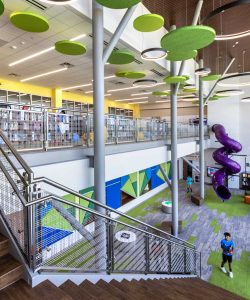
Ruth Cherry Elementary | Royse City ISD
Jack Ream: Ruth Cherry Elementary in Royse City ISD was a good example of that. During the supply chain challenges, we knew early on that we couldn’t get joists. Because we were involved during design, we were able to work with Dunaway and the architect to change the structural approach and use wide-flange steel beams in place of joists for the roof framing. Those early conversations allowed the project to stay on track and open on schedule.
Jennifer Douglas: I remember that project. We were constantly discussing material availability, costs, schedules, and structural systems. Having those conversations allowed the team to make informed decisions and keep moving forward without a lot of redesign or last minute/critical changes during construction.
How have past market disruptions changed the way projects are planned and delivered?
Jack Ream: The supply chain challenges of 2021 and 2022 changed the way we think about planning. We still opened every project on time, but that required a proactive approach. Whether it was roofing materials, switchgear, or other long-lead items, we didn’t wait for problems to solve themselves. We found solutions and kept moving.
One of the tools we developed was a detailed delivery log. We identify when materials are needed on site, account for lead times, review periods, and submittals, then work backwards to determine when decisions need to be made. It’s all about being proactive instead of reacting to delays.
What advice would you give school districts planning future bond programs?
Jennifer Douglas: Don’t overthink growth. We’ve seen districts anticipate growth at a pace that ultimately didn’t happen, and that affects facilities planning, schedules, and budgets.
Jack Ream: Build what you need rather than trying to stay too far ahead of growth. School districts are often behind because tax revenue doesn’t immediately follow development. Understanding those realities and planning for them is critical. In fast-growth districts, it can be tempting to build ahead of demand, but that’s not always financially realistic. Sometimes the better approach is to phase projects and expand as enrollment catches up. You’re almost always playing catch-up because the students arrive before the tax revenue fully catches up.
Can you share an example of a time when proactive planning and collaboration helped a project stay on track?
Jack Ream: Fate High School in Royse ISD stands out as one of the best-coordinated projects we’ve worked on. There was extensive collaboration during design and preconstruction around structural systems, precast elements, construction phasing, and cost. Because those conversations happened early and the entire team stayed engaged throughout the process, we were able to work through challenges quickly and keep the project moving forward.
Jennifer Douglas: That’s a project where the value of collaboration was apparent from the beginning. We had ongoing conversations with Northstar and the design team before we even got started on any of the structural designs. The intent was to discuss the best solutions for different areas of the building, ultimately that coordination helped create a more seamless construction schedule allowing multiple trades to be working on the site at the same time but not overlapping with each other.
Can you share an example where teamwork helped overcome an unexpected field issue?
Jennifer Douglas: Willard Middle School in Celina ISD is a great example. During construction, the team identified an unexpected settlement issue involving two columns in a classroom wing. Northstar called us immediately, and we brought together the geotechnical engineer, and the rest of the design team to investigate the issue and determine the best solution.
Rather than shutting the entire project down, we isolated that portion of the building and allowed construction to continue elsewhere while we worked through the problem.
Jack Ream: We ultimately repaired the issue and lost about six weeks in that area, but because everyone communicated and stayed focused on solving the problem, we were able to recover that time and still open the school on schedule.
Jennifer Douglas: Communication was key. When the construction team needed an answer, we made sure they had one quickly. Everyone stayed engaged, and that’s what allowed the project to keep moving.
What makes the partnership between Northstar Builders and Dunaway successful?
Jack Ream: Overcommunication. I’d rather tell somebody bad news as soon as I know it than wait until the end. We’ve always believed in being transparent and doing what’s right for the project.
Jennifer Douglas: We’ve worked together for a long time, and that has in turn evolved into trust and respect. We know we can call each other, ask questions, work through challenges, and find solutions together. That level of communication makes projects run much more smoothly.
Ready to plan your district's next project?
From early planning through construction, collaboration can make the difference between reacting to challenges and anticipating them. Dunaway’s multidisciplinary team works alongside school districts, architects, and contractors to identify potential issues early, evaluate solutions, and keep complex K-12 projects on track. Learn how Dunaway can support your next K-12 project.
About the Author