Reducing Risk in K-12 Design: The Role of Effective QA/QC
When it comes to school districts, protecting students is the top priority, but delivering safe, functional learning environments also depends on protecting schedule, budget, and design intent. At Dunaway, our Quality Assurance and Quality Control (QA/QC) process is designed to do exactly that: reduce risk, preserve design vision, and keep projects on track.
As Makenzie Castongue, PE, Project Manager and Associate in Dunaway’s structural department, explains: “Dunaway’s QA/QC process stands apart because it is intentionally built for the high-complexity realities of educational facilities.”
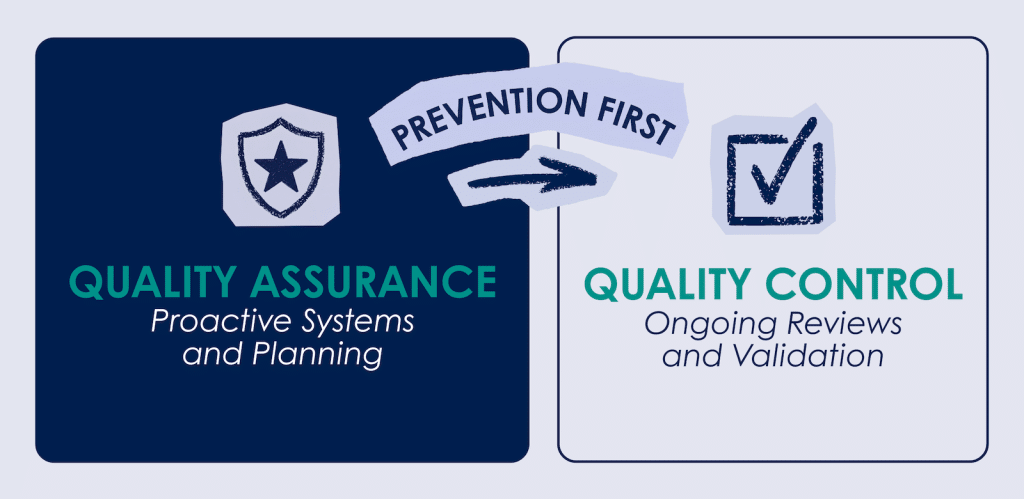
Our approach is built on two complementary systems. Quality Assurance works upstream, establishing standards and review structures to prevent issues before they arise. Quality Control operates at the deliverable level, verifying that every drawing, calculation, and detail meets those standards before it reaches the client.
For K-12 school districts, an effective QA/QC process delivers more than technical accuracy. It provides:
- Greater confidence that projects will remain aligned with bond program budgets
- Fewer field conflicts, change orders, and unexpected costs during construction
- Improved schedule reliability to support critical school opening dates
- Better coordination on occupied campuses where safety and operational continuity are essential
- Reduced project risk from planning through construction closeout
Ultimately, strong QA/QC gives district leaders greater confidence that their projects will be delivered safely, efficiently, and as intended.
Dunaway’s QA/QC process stands apart because it is intentionally built for the high-complexity realities of educational facilities.
”A Multidisciplinary, Firm-wide Advantage
One of the ways this approach comes to life is through how our teams work together across disciplines, strengthened by our in-house surveying capabilities. Because our survey teams understand exactly what designers need from the outset, they deliver complete, design-ready data – reducing gaps in existing conditions, minimizing return field visits, and avoiding added costs later in the process.
Quality starts at kickoff, not at the first milestone review. As a multidisciplinary firm, Dunaway’s QA/QC process unifies service lines to:
- Manage compressed schedules across disciplines
- Improve coordination during handoffs
- Identify scope gaps early
- Reinforce a single, integrated delivery team

Hutto ISD – Creekside High School | Renderings Courtesy of VLK Architects
Every project begins with a Project Execution Plan that defines clear roles, responsibilities, and review procedures. A Technical Lead – independent from day-to-day production – provides a fresh perspective at each milestone, pressure-testing decisions against site conditions and constructability.
On Hutto ISD’s Creekside High School, this approach enabled early identification of a critical interface between civil paving and structural foundations in expansive soils. The team developed a unified, cost-effective transition strategy upfront – preventing a common issue that typically surfaces later in the field.
That same early alignment reshaped how the team approached the steel package, front-loading QA/QC reviews and adjusting the sequencing of design and procurement. These decisions were not made at milestones – they were built into the project from the start and carried through every phase. The result: maintained schedule certainty and reduced downstream rework on a highly constrained project.
Quality Assurance = Proactive Schedule Protection
In K‑12 work, schedules are unforgiving. Schools must open in August—regardless of weather delays, material shortages, or coordination challenges. Dunaway’s QA approach is designed to identify risks early, track changes methodically, and prevent cascading impacts to the schedule.
To support this, our teams incorporate pull-planning strategies – working backward from key milestones to align disciplines, define sequencing, and coordinate handoffs. These workflows are embedded in our Project Execution Plans and tracked through our QA/QC Portal, reinforcing accountability and visibility across the team.
By applying this within a shared QA/QC framework – supported by discipline-specific task lists and milestone-based reviews – we ensure consistent scrutiny across every system, even when teams are working in parallel.
Quality Control = Targeted Verification
While QA focuses on prevention, our Quality Control (QC) process makes sure every deliverable is accurate, coordinated, and ready for construction. Rather than relying on a single final review, Dunaway conducts targeted QC reviews throughout each phase of the project, aligned with the needs of the work at that stage.
These include discipline-specific design checks, cross-discipline coordination reviews, constructability evaluations, and scope gap assessments. By verifying work incrementally, we maintain alignment, catch discrepancies early, and deliver fully vetted documents that reduce field conflicts and support efficient construction.
Continuous Improvement Through Innovation
At the core of Dunaway’s QA/QC process is a commitment to building better tools, not just adopting them. Our proprietary platform, the Portal, serves as the backbone for planning, tracking, and managing quality across every phase, from project setup through construction closeout. It provides real-time visibility into task ownership, QA/QC status, and project health, and evolves continuously based on lessons learned.
The Portal is supported by production-level tools that embed quality into daily workflows. Revit plug-ins enforce firm standards during modeling, while a continuously vetted detail library ensures consistency across projects. These systems are aligned with platforms such as Procore and Autodesk Forma, enabling efficient RFI management and minimizing gaps between design and construction.
Dunaway is also exploring AI-assisted tools to enhance speed and quality – but always with the engineer at the center. AI is used to streamline repetitive review tasks, identify coordination conflicts, and surface insights from historical data – freeing teams to focus on higher-value decisions.
Continuity That Protects Design Intent
Just as important as how we review work is who remains involved. Dunaway prioritizes team continuity from kickoff through construction closeout, ensuring the same professionals who shape the design stay engaged throughout delivery.
This consistency is critical on complex K‑12 projects, where coordination demands increase significantly. By maintaining that continuity, our teams preserve design intent, reduce misinterpretation, and enable faster, more confident decision-making in the field.
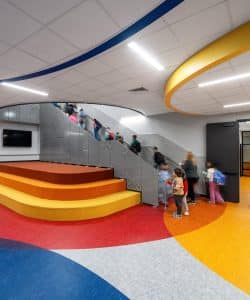
Bastrop ISD – Adelton Elementary School
Before each new project, our teams review RFI logs and contractor feedback from previous builds, applying those lessons forward to future campuses and bond programs. On the Elgin ISD and Bastrop ISD’s Adelton Elementary School prototype programs, this approach resulted in fewer surprises, reduced change orders, and smoother project delivery.
This commitment to continuous improvement extends beyond any single project. Each of Dunaway’s service lines conducts annual quality audits, with findings reconciled at the corporate level so lessons learned don’t remain siloed – they become part of how the entire firm operates. By continuously refining our processes and sharing knowledge across disciplines, we strengthen quality on every project we deliver.
The result is simple: fewer surprises, fewer change orders, and a smoother path from groundbreaking to ribbon cutting.
Ready to Experience the Dunaway Difference?
At Dunaway, QA/QC isn’t a checkpoint; it’s an integrated process designed to protect what matters most: student environments, district resources, and long-term performance. By identifying issues early, maintaining continuity, and aligning teams across disciplines, we help K-12 clients deliver projects with greater confidence, so that they can focus on what really matters: the students.
About the Author